What's new

How should the world react to the new US doctrines?

Click For Summary
SUMMARY

The forum discussion centers on the global response to the new U.S. foreign policy under the Trump administration, characterized by isolationism and a departure from traditional alliances. Key strategies proposed include coordinated diplomatic isolation, economic measures targeting regime elites, and strengthening independent defense postures in Europe and Canada. Participants express concerns about the implications of U.S. consulate closures and the potential for diminished international cooperation, emphasizing the need for proactive measures to mitigate the fallout from U.S. policies.

PREREQUISITES
  • Understanding of U.S. foreign policy dynamics
  • Knowledge of international diplomatic relations
  • Familiarity with economic sanctions and their implications
  • Awareness of NATO's role in global security
NEXT STEPS
  • Research the impact of economic sanctions on regime elites
  • Study the implications of U.S. consulate closures on international relations
  • Explore independent defense strategies for European nations
  • Analyze historical instances of diplomatic isolation and their outcomes
USEFUL FOR

Political analysts, international relations scholars, diplomats, and anyone interested in understanding the implications of U.S. foreign policy shifts on global alliances and security dynamics.

Messages
1,110
Reaction score
1,515
I am currently constantly reminded of German history, especially Munich 1938 and Neville Chamberlain's appeasement policy, even from persons I wouldn't have expected it from like Macron.

How do you think the world should react to the fundamentally new direction of the United States?
 
Coordinated diplomatic isolation, economic measures targeting regime elites, strengthened independent defense postures in Europe and Canada, and unified condemnation of Trump's policies are essential first steps. The international community can't afford passive disbelief.

Contain. Disengage. Dismantle.
 
Coordinated diplomatic isolation
I think the Trump administration desires this outcome and will feed the fire. Not to say you are wrong in saying this is an appropriate world response - if someone doesn't want an alliance, of course withdrawing is a rational response. My comment to you here is coming from my current perspective that Trump's goals are ultimately more isolationist than expansionist. That said, I know you have concerns regarding Trumps designs on Canadian sovereignty, and I respect those concerns - his rhetoric has certainly given just cause for such concerns.


economic measures targeting regime elites
I expect this could potentially be very effective, if the targeting could be specific enough. A good example is the Canadian tariff on Florida oranges (as far as I know that is still happening?).

strengthened independent defense postures in Europe and Canada
Certainly and unfortunately rational responses. I'd include Mexico in that list.
 
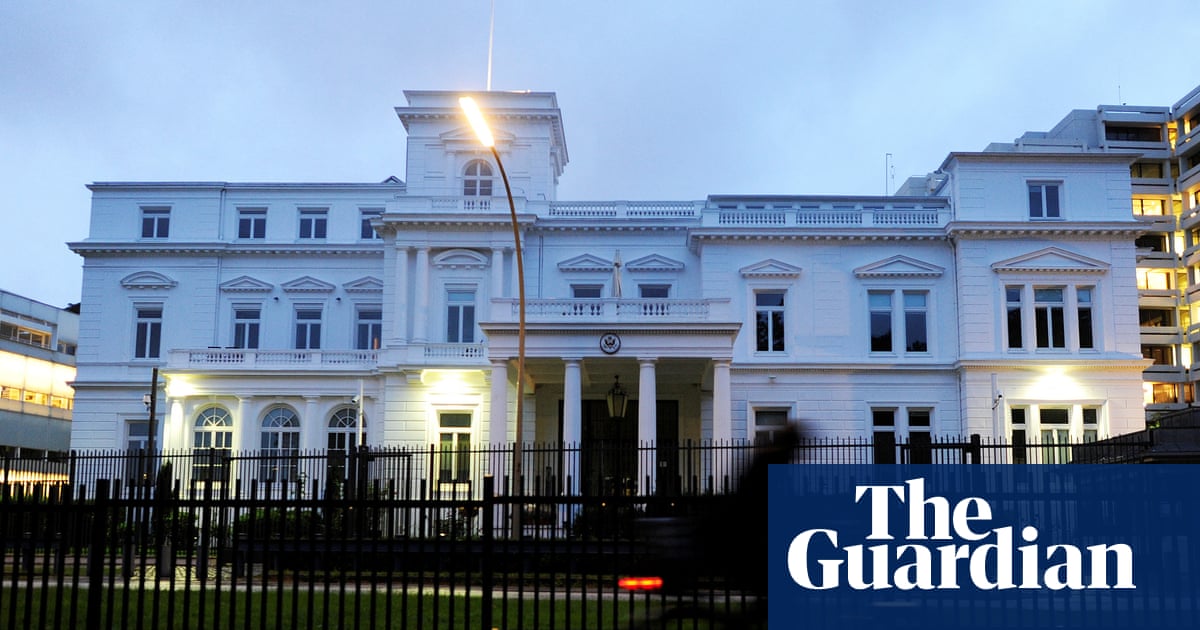
The US administration just announced the closure of a number of consulates in Western Europe and cutting State Department positions:


Trump is deliberately alienating and isolating the United States in a seemingly deliberate attempt to weaken it. My theory is that it is being done so that he and his oligarchs can steal as much of the fruits of the last 250 years of American striving and suffering as they can before it all crumbles to ash. Regardless of the reason, and as little as anyone wants to see that, the rest of the world has to act in their own interests and build as thick a firewall as they possibly can to minimize the effects radiating outward from this absolute catastrophe.
 
I think the Trump administration desires this outcome and will feed the fire.
Yep, that's likely. So a clear distinction is needed that while Trump is taken and exposed as a clown he is, the rest of the US is still a potential partner and ally - even with the present 'inconveniences' properly countered and consequences accounted.
 
the rest of the US is still a potential partner and ally

I personally appreciate the sentiment. Still, I'm concerned that the next few decades will show a US that is bi-polar in both domestic and foreign policy. Periods of dealing with leaders who desire trust-based / mutually beneficial alliances may only last for 4 or 8 years. What a rational foreign policy can possibly look like, other than what @EricDMMiller called a firewall, with such a bi-polar global super-power (as the US is still deemed today, at least) I haven't a clue.
 
This is completely outrageous and will have lasting effects. Isolationism doesn't work. Just as North Korea.

This shows again the lack of basic political understanding. Consulates are primarily serving US citizens abroad, not foreigners. There are currently (as of 12/31/2023) 278 (178 men, 97 women) Americans living in my relatively small city in Germany. I guess they all will be delighted to have longer journeys to renew their passports! It will be interesting to compare these data four years from now. The next consulate is currently about 10 miles away, a short train ride.
 
Last edited:
This shows again the lack of basic political understanding. Consulates are primarily serving US citizens abroad, not foreigners.
Not sure the point you're trying to make here. Is it that I don't know the purpose of consulates? Lack of services abroad will reduce INTL travel.
 
I have to say that it is also a limited view of what consular services do. While one of their primary functions is to serve their citizens abroad, they are also instrumental in local diplomacy and facilitating trade, business, and investment.

They can be the ground floor for international relations.

They also are great places to keep and communicate with intelligence operatives.
 
Not sure the point you're trying to make here. Is it that I don't know the purpose of consulates? Lack of services abroad will reduce INTL travel.

You know, but the current US administration doesn't seem to know, or worse, ignore the needs of its citizens abroad. If almost 300 Americans live in a town of a bit more than 120,000 people, how many will live in the entire metropolitan region with about 3,500,000 people? Closing the next consulate will be very inconvenient for them, not the rest. And, yes, getting a visa will be more difficult, too, affecting tourism to the states. Not quite sure whether it will affect business travel.
 
My first overseas mission a few years before the end of the Vietnam War, I was detached from USAF to State Department in an allied country adjacent to battle areas. Despite typical gripes that the ambassador despised service people, I found consular staff to be welcoming extremely helpful and always diplomatic.

The embassy issued useful pamphlets and language textbooks that explained local culture and how all American workers and visitors become de facto ambassadors to the local people. I use the precepts learned at State to this day when away from home. Respect for other cultures remains paramount.

Consular mission includes myriad duties along with representing US citizens. To misquote L. Frank Baum, "We ain't in Queens (Kansas) anymore, Toto.". Or to paraphrase Shakespeare, "You must forgive him. He thinks his narrow prejudices constitute a law of Nature.".
 
And it should not be forgotten that Americans are subject to American tax law regardless of where they live, even if all income and expenses are generated in the country in which they live. Double taxation is a real problem.
 
I had to think about last October. That it's now in a way the other way around with the US consulates is weird.

Germany closes Iranian consulates
31.10.2024 | 21:41

After the execution of the German-Iranian Sharmahd, the three Iranian general consulates in Germany have to close.
 
Well, changes are already under way! He broke his oath the moment he spoke it.

Portugal rules out buying F-35s because of Trump​

The country’s air force has recommended buying the jets, but the outgoing defense minister said “the predictability of our allies” must be taken into account when making procurement decisions.

Portugal ruled out replacing its U.S.-made F-16 fighter jets with more modern F-35s because of Donald Trump — in one of the first examples of the U.S. president killing a potential lucrative arms deal.

The country's air force has recommended buying Lockheed Martin F-35s, but when outgoing Defense Minister Nuno Melo was asked by Portugese media Público whether the government would follow that recommendation, he replied: “We cannot ignore the geopolitical environment in our choices. The recent position of the United States, in the context of NATO ... must make us think about the best options, because the predictability of our allies is a greater asset to take into account."

With the dramatic realignment taking place under Trump — who said again today he would annex Greenland and threatened Canada — there are fears the U.S. government could decide block access to software updates and spare parts needed to make the F-35 fully operational.


Not that Europe wouldn't have alternatives to offer:

 
Last edited:

Liberal Democracy Values

  • Free and Fair Elections
  • Rule of Law
  • Separation of Powers & Checks and Balances
  • Protection of Civil Liberties and Human Rights
  • Pluralism & Political Competition
  • Independent Media & Free Press
  • Open Civil Society

Community Values

  • Civility
  • Productivity
  • Good Faith Debate
  • Evidence Based Debate
  • Transparency
  • Integrity

Community Motto

"It is the responsibility of intellectuals to speak the truth and expose lies." - Noam Chomsky
Back
Top