
- 128
- 76
Trump is using the presidency to enrich himself in many non traditional and corrupt ways:
$Trump
 en.wikipedia.org
$Trump (stylized in all caps) is a meme coin associated with United States president Donald Trump, hosted on the Solana blockchain. One billion coins were created; 800 million remain owned by two Trump-owned companies, after 200 million were publicly released in an initial coin offering (ICO) on January 17, 2025. Less than a day later, the aggregate market value of all coins was more than $27 billion, valuing Trump's holdings at more than $20 billion. A March 2025 Financial Times analysis found that the crypto project netted at least $350 million through sales of tokens and fees.
en.wikipedia.org
$Trump (stylized in all caps) is a meme coin associated with United States president Donald Trump, hosted on the Solana blockchain. One billion coins were created; 800 million remain owned by two Trump-owned companies, after 200 million were publicly released in an initial coin offering (ICO) on January 17, 2025. Less than a day later, the aggregate market value of all coins was more than $27 billion, valuing Trump's holdings at more than $20 billion. A March 2025 Financial Times analysis found that the crypto project netted at least $350 million through sales of tokens and fees.
The venture has faced widespread condemnation from ethics experts for Donald Trump's conflicts of interest related to the project and his presidential duties. During the second Trump administration, Trump has promoted $Trump and taken actions that have raised the value of the meme coin, contributing to a substantial increase in his net worth
...
In April 2025, the top 220 holders of the coin were offered dinner with the president, and the very top 25 holders would receive a special VIP White House tour. Following the announcement, the coin jumped more than 50%. Analysis found that leaked information about the promotion allowed certain traders to make bets on the coin before it was publicly announced. According to The New York Times, certain buyers in interviews and statements said they "bought the coins or entered the dinner contest with the intention of securing an action by Mr. Trump to affect United States policy". On May 13, The New York Times reported that GD Culture Group, a small company with ties to China, no reported revenue in 2024, and an affiliation with TikTok, announced it would spend $300 million on purchasing Bitcoin and $Trump using proceeds from "a stock sale to an unnamed entity in the British Virgin Islands". The purchase was the first known instance of a China-linked firm buying Trump's cryptocurrency. TikTok is facing a ban in the US, although Trump has postponed the decision several times
...
The dinner posed ethics concerns and opportunities for foreign influence. Wyoming senator Cynthia Lummis and Senate majority leader Thom Tillis expressed concerns over the dinner. Citizens for Responsibility and Ethics in Washington's Donald Sherman described it as "one of the most blatant and appalling instances of selling access to the presidency". Massachusetts senator Elizabeth Warren described the dinner as an "orgy of corruption", while Oregon senator Jeff Merkley referred to it as "the Mount Everest of American corruption
Bitcoin
Under the watch of the younger generation, the business strayed from its social-media roots to make a massive crypto bet. It sold $1.4 billion of stock and $1 billion of convertible bonds, then plowed the proceeds into bitcoin. In the two months between the deal’s announcement and consummation, the price of bitcoin kept climbing, hitting $119,000 by July, when Trump Media made its purchases.
The transaction reshaped the president’s portfolio, reducing his stake in Trump Media to 41%, adding a mountain of debt, and turning Donald Trump into one of the world’s biggest bitcoin investors.
...
In August, Trump Media poured another $114 million into a lesser-known cryptocurrency, Cronos.
...
Fed Chairman Jerome Powell signaled, to the president’s dismay, that interest rates would remain elevated. Bitcoin fell 5% in a day, dropping the value of Trump Media’s holdings to an estimated $1.7 billion.
...
With bitcoin at roughly $72,000 today, Trump Media’s crypto stash sits at an estimated $1.4 billion, down $1 billion. The president’s personal stake in Trump Media, meanwhile, has fallen $1.6 billion since his sons trumpeted their bitcoin predictions onstage.
Trump Media & Technology Group
 en.wikipedia.org
the Trump Media & Technology Group was incorporated in February 2021, and on September 3, 2021, Digital World Acquisition Corp. (DWAC), a special-purpose acquisition company, began trading on the Nasdaq after its IPO of 25 million shares. DWAC was created with the help of ARC Capital, a Shanghai-based firm known for listing Chinese companies on American stock markets and which had been under U.S. Securities and Exchange Commission investigation for misrepresenting shell corporations. The DWAC-Trump venture was linked to China Yunhong Holdings until December 2021, when the lead banker promised to sever ties with China and dissolve Yunhong. In February 2022, Reuters reported that the connection between Shanghai-based ARC Capital and Digital World was more extensive than thought, with ARC having offered money to start the SPAC.
en.wikipedia.org
the Trump Media & Technology Group was incorporated in February 2021, and on September 3, 2021, Digital World Acquisition Corp. (DWAC), a special-purpose acquisition company, began trading on the Nasdaq after its IPO of 25 million shares. DWAC was created with the help of ARC Capital, a Shanghai-based firm known for listing Chinese companies on American stock markets and which had been under U.S. Securities and Exchange Commission investigation for misrepresenting shell corporations. The DWAC-Trump venture was linked to China Yunhong Holdings until December 2021, when the lead banker promised to sever ties with China and dissolve Yunhong. In February 2022, Reuters reported that the connection between Shanghai-based ARC Capital and Digital World was more extensive than thought, with ARC having offered money to start the SPAC.
...
In March it was reported that New York investigators were looking into whether TMTG had violated anti-money laundering laws by accepting $8 million connected to a Russian oligarch
Kennedy Centre
A former official at the Kennedy Center detailed the "bizarre moves" and "cronyism" they witnessed that led to President Donald Trump's decision to close the center for two years for renovations.
...
the institution's finances had become closely wedded to Trump himself. For instance, someone could purchase a $2 million box at the theatre and get a private reception with the president afterward. The center also began selling sponsorships for the first time since it opened in 1971, Palermo noted, and even renamed a donor's lounge after a CEO who was pardoned by Trump after being convicted of defrauding investors.
Iran war
 futurism.com
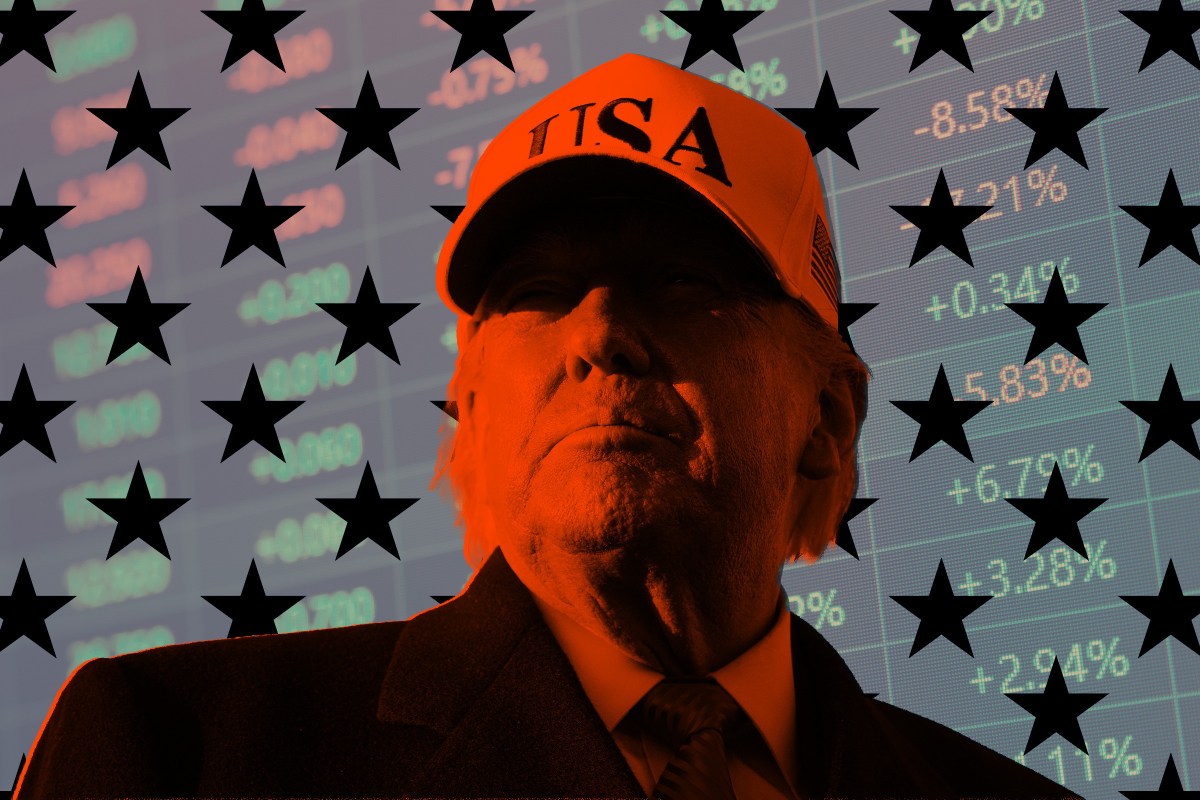
Just after noon on Friday, March 20th, US president Donald Trump declared victory to a group of reporters in his broadly unpopular war with Iran. Just two minutes later, however, he announced he was sending US marines anyway. The next minute, the president said there would be no boots on the ground after all. A few beats later, he admitted he didn’t want a ceasefire, then declared victory again, then requested a ceasefire.
futurism.com
Just after noon on Friday, March 20th, US president Donald Trump declared victory to a group of reporters in his broadly unpopular war with Iran. Just two minutes later, however, he announced he was sending US marines anyway. The next minute, the president said there would be no boots on the ground after all. A few beats later, he admitted he didn’t want a ceasefire, then declared victory again, then requested a ceasefire.
...
As a recent analysis by economist and Nobel laureate Paul Krugman argues, there’s evidence that insiders are profiting off the war in Iran. On Monday, for example, Trump reversed his weekend commitment to deliver painful retribution on the Iranian people if the country failed to open the Strait of Hormuz within 48 hours. At 7:05am on Monday morning, however, Trump chickened out, issuing a five-day pause on hostilities via a post on Truth Social.
The price of crude oil, which had flailed upward for weeks as shipments from the Persian Gulf slowed to a trickle, plummeted immediately, from around $112 a barrel before the announcement to a low of $97 by 11:00am.
However, about 15 minutes before Trump’s post, CNBC reported, there was a massive increase in the amount of S&P 500 e-Mini futures trading on the market, right before their price skyrocketed from around $6,500 to around $6,700. Someone also got incredibly lucky playing the oil market, with West Texas Intermediate May futures seeing a massive spike in trading activity at the exact same time — a sign that someone had shed theirs before the price experienced a major drop.
“The story would be baffling,” Krugman wrote, “except that there’s an obvious explanation: somebody close to Trump knew what he was about to do, and exploited that inside information to make huge, instant profits.”
It certainly isn’t the first time people had lucrative premonitions just minutes before Trump’s geopolitical decisions become public. Earlier this year, an incredibly well-timed bet on Polymarket came in just minutes before Trump ordered the US military to attack Venezuela.
Whitehouse Ballroom
 www.factcheck.org
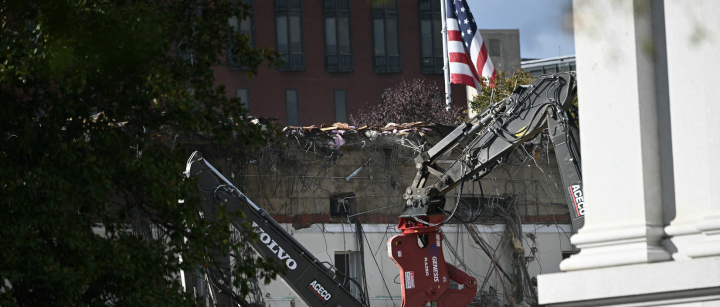
Ethics and legal experts raised other concerns about the ballroom project. Noah Bookbinder, president of Citizens for Responsibility and Ethics in Washington, told Axios that the White House fundraising dinner could affect public trust in government. “All of this money that they’re giving for something that’s important to the president could influence his decision making, and he could be thinking about that instead of thinking about what’s best for the American people,” Bookbinder said.
www.factcheck.org
Ethics and legal experts raised other concerns about the ballroom project. Noah Bookbinder, president of Citizens for Responsibility and Ethics in Washington, told Axios that the White House fundraising dinner could affect public trust in government. “All of this money that they’re giving for something that’s important to the president could influence his decision making, and he could be thinking about that instead of thinking about what’s best for the American people,” Bookbinder said.
Richard W. Painter, a professor at Minnesota Law who served as the chief ethics lawyer in the White House Counsel’s Office under President George W. Bush, told us that Trump’s ballroom fundraising crosses several ethical lines.
“First,” Painter said in an email, “this is use of public office for private gain in violation of federal ethics rules.” He cited the Code of Federal Regulations, which says government employees “may not use or permit the use of their Government position or title, or any authority associated with their public office, in a manner that is intended to coerce or induce another person, including a subordinate, to provide any benefit, financial or otherwise, to the employee.”
Painter also said the ballroom project raises a “problem under the Antideficiency Act.” The act “prohibits federal agencies from receiving voluntary services or other gifts from outside sources to ‘top off’ funds appropriated by Congress,” Painter explained.
- $Trump
- Bitcoin
- Trump Media & Technology Group
- Kennedy Centre
- Iran War & Insider Trading
- Whitehouse Ballroom
- Trump hotels
- NFT
$Trump
$Trump - Wikipedia
The venture has faced widespread condemnation from ethics experts for Donald Trump's conflicts of interest related to the project and his presidential duties. During the second Trump administration, Trump has promoted $Trump and taken actions that have raised the value of the meme coin, contributing to a substantial increase in his net worth
...
In April 2025, the top 220 holders of the coin were offered dinner with the president, and the very top 25 holders would receive a special VIP White House tour. Following the announcement, the coin jumped more than 50%. Analysis found that leaked information about the promotion allowed certain traders to make bets on the coin before it was publicly announced. According to The New York Times, certain buyers in interviews and statements said they "bought the coins or entered the dinner contest with the intention of securing an action by Mr. Trump to affect United States policy". On May 13, The New York Times reported that GD Culture Group, a small company with ties to China, no reported revenue in 2024, and an affiliation with TikTok, announced it would spend $300 million on purchasing Bitcoin and $Trump using proceeds from "a stock sale to an unnamed entity in the British Virgin Islands". The purchase was the first known instance of a China-linked firm buying Trump's cryptocurrency. TikTok is facing a ban in the US, although Trump has postponed the decision several times
...
The dinner posed ethics concerns and opportunities for foreign influence. Wyoming senator Cynthia Lummis and Senate majority leader Thom Tillis expressed concerns over the dinner. Citizens for Responsibility and Ethics in Washington's Donald Sherman described it as "one of the most blatant and appalling instances of selling access to the presidency". Massachusetts senator Elizabeth Warren described the dinner as an "orgy of corruption", while Oregon senator Jeff Merkley referred to it as "the Mount Everest of American corruption
Bitcoin
Under the watch of the younger generation, the business strayed from its social-media roots to make a massive crypto bet. It sold $1.4 billion of stock and $1 billion of convertible bonds, then plowed the proceeds into bitcoin. In the two months between the deal’s announcement and consummation, the price of bitcoin kept climbing, hitting $119,000 by July, when Trump Media made its purchases.
The transaction reshaped the president’s portfolio, reducing his stake in Trump Media to 41%, adding a mountain of debt, and turning Donald Trump into one of the world’s biggest bitcoin investors.
...
In August, Trump Media poured another $114 million into a lesser-known cryptocurrency, Cronos.
...
Fed Chairman Jerome Powell signaled, to the president’s dismay, that interest rates would remain elevated. Bitcoin fell 5% in a day, dropping the value of Trump Media’s holdings to an estimated $1.7 billion.
...
With bitcoin at roughly $72,000 today, Trump Media’s crypto stash sits at an estimated $1.4 billion, down $1 billion. The president’s personal stake in Trump Media, meanwhile, has fallen $1.6 billion since his sons trumpeted their bitcoin predictions onstage.
Breaking Down Trump's Bitcoin Executive Order
- Trump’s Executive Order promotes digital asset rights, bans CBDCs, and establishes a Working Group to evaluate a potential Strategic Bitcoin Reserve.
- The EO’s stance against CBDCs and support for USD stablecoins is a significant step forward for cryptocurrency independence and growth.
- Trump’s commitment to making the US the “world capital of AI and Crypto” is bullish for Bitcoin, potentially driving its value to $1,000,000.
- Bitcoin’s recognition as digital gold and its growing acceptance could lead to a market capitalization comparable to gold’s $18.5 trillion.
Trump Media & Technology Group
Trump Media & Technology Group - Wikipedia
...
In March it was reported that New York investigators were looking into whether TMTG had violated anti-money laundering laws by accepting $8 million connected to a Russian oligarch
Kennedy Centre
A former official at the Kennedy Center detailed the "bizarre moves" and "cronyism" they witnessed that led to President Donald Trump's decision to close the center for two years for renovations.
...
the institution's finances had become closely wedded to Trump himself. For instance, someone could purchase a $2 million box at the theatre and get a private reception with the president afterward. The center also began selling sponsorships for the first time since it opened in 1971, Palermo noted, and even renamed a donor's lounge after a CEO who was pardoned by Trump after being convicted of defrauding investors.
Iran war
Evidence Grows That Trump Is Using the War in Iran to Manipulate Markets
Donald Trump's rapidly oscillating statements on the Iran war have been a feeding frenzy for stock market whales.
futurism.com
...
As a recent analysis by economist and Nobel laureate Paul Krugman argues, there’s evidence that insiders are profiting off the war in Iran. On Monday, for example, Trump reversed his weekend commitment to deliver painful retribution on the Iranian people if the country failed to open the Strait of Hormuz within 48 hours. At 7:05am on Monday morning, however, Trump chickened out, issuing a five-day pause on hostilities via a post on Truth Social.
The price of crude oil, which had flailed upward for weeks as shipments from the Persian Gulf slowed to a trickle, plummeted immediately, from around $112 a barrel before the announcement to a low of $97 by 11:00am.
However, about 15 minutes before Trump’s post, CNBC reported, there was a massive increase in the amount of S&P 500 e-Mini futures trading on the market, right before their price skyrocketed from around $6,500 to around $6,700. Someone also got incredibly lucky playing the oil market, with West Texas Intermediate May futures seeing a massive spike in trading activity at the exact same time — a sign that someone had shed theirs before the price experienced a major drop.
“The story would be baffling,” Krugman wrote, “except that there’s an obvious explanation: somebody close to Trump knew what he was about to do, and exploited that inside information to make huge, instant profits.”
It certainly isn’t the first time people had lucrative premonitions just minutes before Trump’s geopolitical decisions become public. Earlier this year, an incredibly well-timed bet on Polymarket came in just minutes before Trump ordered the US military to attack Venezuela.
Whitehouse Ballroom
Ethical Concerns About Private Funding
Trump's White House Ballroom Sparks Questions About Funding and Ethics - FactCheck.org
Q: Is President Donald Trump paying in full for the new ballroom at the White House, and what is the cost? A: The White House said Trump and “other patriot donors” would pay for the ballroom, which the president estimated would cost $300 million. So far, $200 million has been pledged, according...
www.factcheck.org
Richard W. Painter, a professor at Minnesota Law who served as the chief ethics lawyer in the White House Counsel’s Office under President George W. Bush, told us that Trump’s ballroom fundraising crosses several ethical lines.
“First,” Painter said in an email, “this is use of public office for private gain in violation of federal ethics rules.” He cited the Code of Federal Regulations, which says government employees “may not use or permit the use of their Government position or title, or any authority associated with their public office, in a manner that is intended to coerce or induce another person, including a subordinate, to provide any benefit, financial or otherwise, to the employee.”
Painter also said the ballroom project raises a “problem under the Antideficiency Act.” The act “prohibits federal agencies from receiving voluntary services or other gifts from outside sources to ‘top off’ funds appropriated by Congress,” Painter explained.


