What's new

“Referendum democracy” – how it can work

  • Context: Other 
  • Thread starter Thread starter Spathi
  • Start date Start date
Click For Summary
SUMMARY

The discussion centers on the concept of "democracy 2.0," which proposes a system of frequent referendums to engage citizens in political decision-making. The participants argue that while referendums can empower the populace, they also risk manipulation and demagogy, as evidenced by historical examples like Nazi Germany. The conversation highlights the challenges of ensuring an informed electorate, pointing out that elite monopolies on information hinder true democratic participation. Ultimately, the participants conclude that frequent referendums may not solve the underlying issues of citizen enlightenment and could exacerbate existing vulnerabilities in democratic systems.

PREREQUISITES
  • Understanding of representative democracy and its limitations
  • Familiarity with the concept of referendums and their implications
  • Knowledge of historical examples of democratic manipulation, such as Nazi Germany
  • Awareness of the role of information access in political engagement
NEXT STEPS
  • Research the impact of frequent referendums on political engagement and public opinion
  • Explore case studies of referendums in Switzerland and their outcomes
  • Investigate the relationship between information access and voter decision-making
  • Examine historical instances of demagogy in democratic systems
USEFUL FOR

Political scientists, civic educators, policymakers, and anyone interested in the dynamics of modern democracy and citizen engagement.

Messages
83
Reaction score
19
The idea of modern (representative) democracy is simple and looks obvious: the population choses between several professional politicians in power via voting. But in fact, this does not work: these professional politicians establish a “cartel agreement” (often even unconscious) and a monopoly of elites on information, this prevents people who do not belong to elites from going into politics (only Zelensky as exception). Here I suggest “democracy 2.0”, and the main aspect of it is a big number of referendums, which are performed e.g. each week. This system will motivate common people to study sciences like economics for better voting.

These referendums can be performed online; currently some IT decisions like DeFi can be used for guaranteeing that the votes will be calculated both closed (anonymous) and confidently/honestly. I can explain this later. Here is most important idea: these multiple referendums will not be referendums in strict sense, because they will not have a legal force, instead, they will reveal what people want, and the power will have to fulfill the will of nation. If a referendum was “profane”, theoretically the power can reject is in the interest of people, but it will have to explain this later, after leaving the power – otherwise the politicians who ignored the will of nation will be imprisoned via a decision of people via a new referendum. I mean that the people will be able to either imprison somebody, or vice versa give somebody a juridical immunity, via a referendum.
 
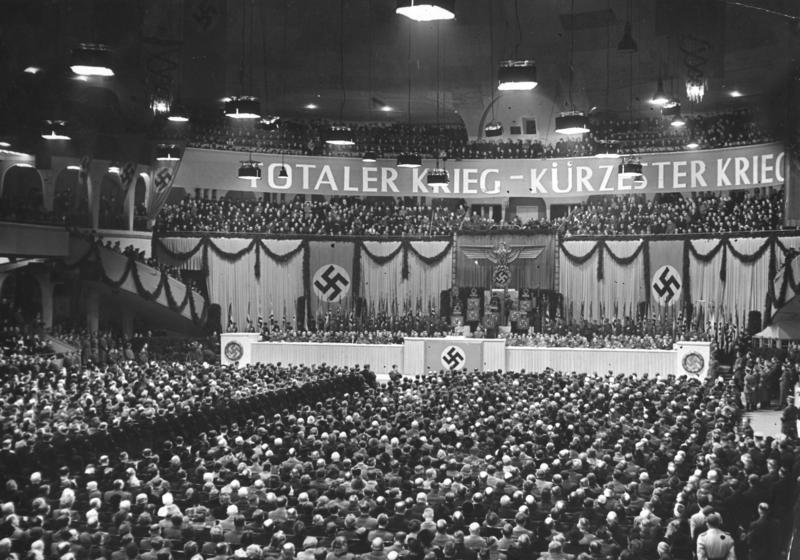
This is a two-edged sword. In my opinion, it opens the door for demagogy and manipulation of the masses way more than the influence of some elites already does. Even Switzerland, which widely uses referendums, only does this on specific questions and not generally. And again, a look at Nazi Germany shows how dangerous such a tool is:

Also, a closer look at the rise of nationalistic regimes nowadays in former Eastern Bloc countries, including Russia, but also Turkey, and the USA, and others, shows how vulnerable societies are toward demagogy and manipulation even without such a mighty tool like referendums.


A democracy requires an enlightened citizenry, and that is precisely the problem for many reasons. Referendums deepen that problem. They do not solve it.
 
Last edited:
This is a two-edged sword. In my opinion, it opens the door for demagogy and manipulation of the masses way more than the influence of some elites already does. Even Switzerland, which widely uses referendums, only does this on specific questions and not generally.
What do you know about Switzerland? Can you name a referendum there, where the people voted irrationally?
As far as I know, during last 170 years, only once the people in Switzerland voted for increasing the social benefits.
 
What do you know about Switzerland? Can you name a referendum there, where the people voted irrationally?
This is unanswerable. "Irrational" is a matter of opinion. And as I said, they only decide on very specific and well-formulated questions. They do not make politics based on referendums. It would be unreliable, and results would be changing all the time. E.g., you can influence the outcomes of referendums by simply phrasing them accordingly. They bring uncertainty and risks.
 
This is unanswerable. "Irrational" is a matter of opinion. And as I said, they only decide on very specific and well-formulated questions. They do not make politics based on referendums. It would be unreliable, and results would be changing all the time. E.g., you can influence the outcomes of referendums by simply phrasing them accordingly. They bring uncertainty and risks.

The logic "the population is too profane and can't vote smartly" is mostly used by anti-dempcrats and anti-liberals, in particular in Russia. But this logic is absolutely flawed, because there is no difference between voting on a referendum and voting for a specific party in usual elections. If the power thinks that a referendum is stupid, it must explain this to the population instead of prohibiting this referendum. And, as I have explained above, these numerous referendums will be rather just "super-accurate polls".
 
The idea of modern (representative) democracy is simple and looks obvious: the population choses between several professional politicians in power via voting. But in fact, this does not work: these professional politicians establish a “cartel agreement” (often even unconscious) and a monopoly of elites on information
Can you elaborate what you mean by monopoly of elites on information?

This prevents people who do not belong to elites from going into politics (only Zelensky as exception).
Can you give examples of how this happens? I don't think this is true in the U.S.

Here I suggest “democracy 2.0”, and the main aspect of it is a big number of referendums, which are performed e.g. each week. This system will motivate common people to study sciences like economics for better voting.
I have to admit I laughed when I read this. I don't think a system like this will motivate very many to learn anything. Generally, people are remarkably lazy.
 
Can you elaborate what you mean by monopoly of elites on information?
The information like the principles of quantitative easing is known only by elites, not by common people. Many people just deny that the inflation is a hidden taxation.
Only in Ukraine, due to some circumstances, a man not belonging to the ruling class could become a presindent. In Western countries, it is considered than only "professionals" like Trump or Biden can go into presidency.
 
Only in Ukraine, due to some circumstances, a man not belonging to the ruling class could become a president. In Western countries, it is considered than only "professionals" like Trump or Biden can go into presidency.
When he announced in 2016, Trump wasn't part of the political class. That was part of his appeal to many of his supporters, but by the establishment, he was largely seen as a joke. What's quite remarkable is that he managed to wrest control of the Republican party from the Republican career politicians.

It's true, though, that if you want to be viable for a prominent position, you generally have to run as a Republican or Democrat. That's why Bernie Sanders, an independent, ran as a Democrat back in 2016. I don't think, however, it's because they have some monopoly on information. (There are plenty of ignorant politicians in Congress.) The two major parties have rigged the rules in their favor to keep outsiders from gaining power.
 
Instead of direct referendums on every issue, I think that we should consider a system of continual confidence, where the representative system remains intact, but instead of elections, each individual simply has a toggle they can switch between any or none of the current parties, with party members gaining and losing seats daily or by the hour as public confidence waxes and wanes.
 
This is my main argument against referendums:
Response biases are present in standardised surveys when values collected from, or reported by, respondents systematically deviate from the actual, true values. Response biases are therefore potential sources of error in social science surveys. They occur when respondents react not only to the content of the
survey question – the question stimulus – but also to other factors. These factors can be found in the most diverse elements of a survey. They may be lie in the respondent him- or herself, in theinterview situation, or in the survey instrument. Response bias that lies in the respondent him- or herself is often a consequence of satisficing. Respondents who have a tendency to satisfice whenanswering questions are motivated by a desire to reduce their cognitive effort. This results in responsebiases such as acquiescence or moderacy bias. In the case of socially desirable responding, respondentsorient themselves towards social norms in order to answer in the way in which they assume that theinterviewer expects them to answer. Respondents who display extreme response bias tend to choose theextreme rating categories irrespective of the content of the question. The second source of responsebias is the interview situation: Response bias also occurs when response behaviour is dependent on thesituation. When respondents react to characteristics or behaviours of the interviewer, these reactionsare known as interviewer effects. By contrast, the term presence effect is used when the respondent’s behaviour is dependent on the presence of third parties. The third source of response bias is the survey instrument: The way in which the questions in the questionnaire are formulated, and the order of the questions and the response alternatives in the questionnaire may influence response behaviour, for example, as halo, primacy, or recency effects, and may lead to response biases

In short:
  1. The way you ask determines the answer you will get. It is obviously easy to manipulate big portions of a society to vote against their interests, like US farmers currently have to learn (record high number of cases of insolvency). How much more power would result from referendums?

  2. It is also very easy to manipulate those elites in power. The USA has factually abandoned its entire system of defence against Russian espionage, and Musk was even easier to manipulate than Trump (German TV documentary).
 
I suggest you to read about the Easterlin paradox:


The economic growth itself does not do anybody happier. During last 500 years, the productivity of labour of the planet has increased maybe 1000 times, but the people haven't become happier because of this. Only psychological factors can make the society happier, and they include the aim in life, which helps people gather friends (for friendship people need to have common aims). A referendum each week will give people such aims, and this will end the lonelisess and misanthropy...
 
This is a two-edged sword. In my opinion, it opens the door for demagogy and manipulation of the masses way more than the influence of some elites already does. Even Switzerland, which widely uses referendums, only does this on specific questions and not generally. And again, a look at Nazi Germany shows how dangerous such a tool is:

Also, a closer look at the rise of nationalistic regimes nowadays in former Eastern Bloc countries, including Russia, but also Turkey, and the USA, and others, shows how vulnerable societies are toward demagogy and manipulation even without such a mighty tool like referendums.


A democracy requires an enlightened citizenry, and that is precisely the problem for many reasons. Referendums deepen that problem. They do not solve it.
Couldn't agree more.
A system that requires an "enlightened citizenry" is doomed.
Nobody asks children if they prefer broccoli or candy.
An example: Why on earth would any society think that universal health care is a bad think?
Brain washing and not much enlightment for starters combined?
Unfortunately what other system of government is there?
 
A democracy requires an enlightened citizenry
I agree, and I'd add that a democracy requires the populace to have enough perceived common interest with each other that most individuals prefer losing an election or a vote to burning the system down. Whatever level one takes votes at won't address such fundamental erosions imo.
 
As I have already explained, a referendum will be performed each week, but these referendums will not be "referendums in strict sense" (they will not have legal force). If the government considers a referendum as "profane", it can reject it; but it will have to explain its position to the people, otherwise the ruling politicians possibly will be imprisoned after leaving the power - through a new referendum. And this leads to the following conclusion. If a ruler (President) rejects a referendum selfishly (e.g. because he does not want to loose money, etc), he will realize, that after leaving the power, he will be soon imprisoned. And this will easily make him a dictator - he will try to use the force (administrative resource) to keep his power. This means, that the proposed model of referendum democracy can work properly only in conjunction with the Ukrainian political model, "ideology of Maidan", the readiness of population to overthrow any power if it becomes corrupted. That's why the survival of Ukraine now is critically important for the human civilization...
 
A system that depends on the threat of violent overthrow if enough people feel a government is ‘corrupt’ ( a subjective assessment) sounds like just what MAGA ordered up on Jan 6th. It does not sound at all to me like liberal democracy.
 
What about the meme "too big to fail"? As far as I understand, this means that the states saves all billionaires from bankruptcy.
I understand where you are coming from, but that could be from a viewpoint that in the system, all billionaires will achieve a deserving of 'protection' after reaching a certain level of wealth, which they do not. Still, for a great many people giving money to a large corporation is stinky, considering they, the leaders of the corporation made bad choices, in retrospect, and should not be rewarded.

Consider General Motors, which the meme was originally about, if I recall correctly.
Even if the company did receive a bail out from the government, it still had to restructure the enterprise to regain profitability. The 'too big to fail' stems from the economic impact the enterprise had on the regional and national economy, including of course the employment at the peak of 250,000 individuals when the downturn occurred. Had the bailout not occurred, all 250,000 employees may have become unemployed. The bailout gave the new team a fighting chance, and in the end 160,000 remained employed. As well, suppliers breathed a sigh of relief, in that they did not have to drastically downsize or shut shop. ( Even with that explanations it still feels stinky, right. Lessor of two evils I suppose. )

Some corporate entities that did not receive bailouts for decisions:
Blackberry - the one time leader in personal communications devices
Nortel - North American leader in telecommunications equipment.
Purdue Pharma - pain medication manufacturer

For some others with no government bailout see
 
Last edited:
@dlu

Interesting that you mention Canadian companies. I worked at a company that was a supplier to both RIM and Nortel, I recall their demises or declines well. (along with, I should add these non-Canadian companies Kodak, Palm, Nokia and others if I were to think longer).

Does Canada have any history of tax-payer funded bail-outs? The 2008 bailouts are sometimes said to be the start of MAGA, if one sees the Tea Party as neophyte MAGA I guess.

Bailouts per se are a bit OT, I don’t want to highjack the thread. I’ll split it out if it goes very far.
 
Does Canada have any history of tax-payer funded bail-outs
A bit.
The downturn, Canada bailed out some automobile companies. Maybe some other large at the time if I rack my brain. Standard bailout mentality at the time to avoid economic ruin.
The Kinder Trans Mountain pipeline 4.5b bought over by Trudeau ( 2018 ) at risk of non-completion ( PS don't one believe that negative press on Trudeau being complete oil negative for Alberta )
Covid relief for companies affected by the shutdowns at the time.
Older Trudeau ( Pierre ) gave a sizeable sum to a faltering trucker company in Quebec, but the firm closed its doors anyways. ( 1984 ) Can't remember the company.
Presently, funds are being directed to sectors complaining about Trump tariffs.

If one considers subsidies in times of trouble, of that given for an industry to obtain maturity, and the sort as bailouts, then it's not that uncommon sector wise. The electrification over oil comes to mind.
Even way back Confederation wise, the Last Spike ( 1885 ) is the story of Canadian Pacific being given concessions for the building of the trans national railway east-west.
All the great looking Canadian hotels in all major cities came about from the agreements.
 
A system that depends on the threat of violent overthrow if enough people feel a government is ‘corrupt’ ( a subjective assessment) sounds like just what MAGA ordered up on Jan 6th. It does not sound at all to me like liberal democracy.
Sounds like the French revolution. Doesn't it?
 
The French Revolution was not / is not a system of government any more than the American Civil War is / was a system of government.

You didn’t post enough for me to know what analogy you are drawing.

If you are saying the French people stand ready today to haul out the guillotines as opposed to casting ballots should they deem their government corrupt, I’d say that sounds like nonsense and ask for a reference.
 
The French Revolution was not / is not a system of government any more than the American Civil War is / was a system of government.

You didn’t post enough for me to know what analogy you are drawing.

If you are saying the French people stand ready today to haul out the guillotines as opposed to casting ballots should they deem their government corrupt, I’d say that sounds like nonsense and ask for a reference.
I thought that "threat of violent overthrow if enough people feel a government is ‘corrupt" was clearly identifying what "sounds like just what MAGA ordered up" as an authoritarian regime. Much like that monarchy that was overthrown so long ago in exactly the way you describe. It sounds to me that what MAGA "ordered up" is obviously not a democracy of any type or form. More like an oligarchy of the billionaires over what seems mainly a mass of insanely uneducated people.
So one could say that effectively what MAGA ordered is exactly the inverse of the French Revolution in which a monarchy became a Republic, in this case a republic is becoming a monarchy of sorts (oligarchy).
I hope this will be enough for to understand the analogy much more clearly sketched by my previoud short comment.
 
I hope this will be enough for to understand the analogy much more clearly
Yes, thanks.

The OP posits a tweak to liberal democracy and then in post 15 amends the tweak to include the condition that -

the proposed model of referendum democracy can work properly only in conjunction with the Ukrainian political model, "ideology of Maidan", the readiness of population to overthrow any power if it becomes corrupted.

I claim this is what happened on Jan 6th. MAGA felt that American democracy had become corrupted, and felt that voting could not resolve this, and so resorted to a violent insurrection with the motivation of preventing (in their view) a corrupt politician from seizing power after (in their view) having lost an election.

Using Jan 6th as an example of what the post #15 condition actually looks like in practice, I am saying that any democracy which requires and excuses violence of its populace whenever the populace feels like voting can't help things is not really a democracy at all.

I do see where you are coming from in your posts 20 and 22, and when I first read post 20, I didn't get what you were saying so thanks again for coming back with more detail. That said, IMO the French Revolution is not a good comparison point because the then-extant French Government was not a Democracy or at all claiming to be one. The French involved in those events did not think they were saving the monarchy.
 
Last edited:
The idea of modern (representative) democracy is simple and looks obvious: the population choses between several professional politicians in power via voting. But in fact, this does not work:
I don't think we are using the voting mechanism correctly in what we call democratic systems; that is why it doesn't work.

The fundamental principle for democracy is "50% + 1", and we rarely honor that. This is done by ignoring people who don't vote or people who did not vote for the representative in place.

Any voting mechanism in a democracy should make sure it has "50% + 1" of people voting for the change, whether it is directly or through representatives.

It should be assumed that the system in place is accepted by everyone. When someone wants a change, they only need to have "50% + 1" voting for the change. People who do not want the change shouldn't bother voting. Why would they, if they like what they have? The question is always the same: "Do you want to change?", and you are either in the "Yes" or "No" group. The "No" group is often perceived negatively, the one against progress, which influences some people, no matter the question. You never see the question asked in the form of "Do you want to stay the same?" which would reverse the "Yes" and "No" groups.

With a true "50% + 1" requirement, the "No" side doesn't exist; only the "Yes" side needs to campaign and vote.

The same goes for elected representatives. The number of people actually voting for them should represent the strength of their voice when they vote to change a current law. Nobody should even be elected by default because they were the only candidate. Let's still have an election, see who wants to make the effort to vote for them, to say they want to be represented by them. It is stupid to assume someone not voting for a representative - especially when they voted for someone else - suddenly agrees with whatever decision they will make.

Also, changing the entire government in a single election is insane. We should change one elected representative at a time over the whole term period. If you have 100 representatives with a 4-year term, you have an election every 14 days happening somewhere in the country. So over the 4-year term, you have voted for the 100 representatives within 1400 days (~4 years). This way, there are no drastic changes in the government, charged with emotions, and every election is a local issue more than a national issue.

Of course, we should vote for the leader once every term, like we do in municipal elections.
 
Very thought-provoking post.

The fundamental principle for democracy is "50% + 1"

I suspect that the more local/smaller layers of government in the US come closer to the 50%+1 way of operating that you describe - not sure about that but it seems like it to me.

One thing that US pundits (on both sides of the spectrum) were saying a lot after the 2016 election was that the US is a "Republic" as opposed to a "Democracy".
 
I don't think we are using the voting mechanism correctly in what we call democratic systems; that is why it doesn't work.

The fundamental principle for democracy is "50% + 1", and we rarely honor that. This is done by ignoring people who don't vote or people who did not vote for the representative in place.

Any voting mechanism in a democracy should make sure it has "50% + 1" of people voting for the change, whether it is directly or through representatives.

It should be assumed that the system in place is accepted by everyone. When someone wants a change, they only need to have "50% + 1" voting for the change. People who do not want the change shouldn't bother voting. Why would they, if they like what they have? The question is always the same: "Do you want to change?", and you are either in the "Yes" or "No" group. The "No" group is often perceived negatively, the one against progress, which influences some people, no matter the question. You never see the question asked in the form of "Do you want to stay the same?" which would reverse the "Yes" and "No" groups.

With a true "50% + 1" requirement, the "No" side doesn't exist; only the "Yes" side needs to campaign and vote.

The same goes for elected representatives. The number of people actually voting for them should represent the strength of their voice when they vote to change a current law. Nobody should even be elected by default because they were the only candidate. Let's still have an election, see who wants to make the effort to vote for them, to say they want to be represented by them. It is stupid to assume someone not voting for a representative - especially when they voted for someone else - suddenly agrees with whatever decision they will make.

Also, changing the entire government in a single election is insane. We should change one elected representative at a time over the whole term period. If you have 100 representatives with a 4-year term, you have an election every 14 days happening somewhere in the country. So over the 4-year term, you have voted for the 100 representatives within 1400 days (~4 years). This way, there are no drastic changes in the government, charged with emotions, and every election is a local issue more than a national issue.

Of course, we should vote for the leader once every term, like we do in municipal elections.
Although I agree in some of the issues you point at there's, in my opinion, many more serious problems in the US political system than the voting mechanism (and not only the US).
 
As I have already explained, a referendum will be performed each week,
For multiple choice referendums, the problems associated with voting for multiple candidates in a representative democracy are the same for the referendum.
You can look at the field of Social Choice Theory at either Wikipedia or Veratasium to get a feel of why it is difficult to get a collective decision that would satisfy everyone.

 
For true democracy, I don't like being asked what my "alternative" choices are. I know what I want, and that is it. There are no second places.

That is why I prefer a system where you elect one person to govern - as usual - but you also elect people to vote on whatever the governing body proposes. Those people should reflect the distribution of the voters' preferences.

There is a document about what such a system might look like. For those interested, it is in French and based on the Canadian electoral system.
 
You can look at the field of Social Choice Theory at either Wikipedia or Veratasium to get a feel of why it is difficult to get a collective decision that would satisfy everyone.
Maybe you mean the Condorcet theorem?


This problem must be less actual for the referendum democracy, than for usual democracy when the voters elect one of A, B, C candidates. To fight the problem found by Condorcet, some scale must be added to each voting, but this is very difficult to implement. Anyway, a true democracy must include a very high turnout, and maybe someday humanity will come to a law that each referendum must be approved by the total majority of citizens, not the majority of people who voted. Otherwise, elections and referendums can contradict each other.
 

Liberal Democracy Values

  • Free and Fair Elections
  • Rule of Law
  • Separation of Powers & Checks and Balances
  • Protection of Civil Liberties and Human Rights
  • Pluralism & Political Competition
  • Independent Media & Free Press
  • Open Civil Society

Community Values

  • Civility
  • Productivity
  • Good Faith Debate
  • Evidence Based Debate
  • Transparency
  • Integrity

Community Motto

"It is the responsibility of intellectuals to speak the truth and expose lies." - Noam Chomsky
Back
Top