What's new

Warren Buffett: Tariffs are ‘an act of war’

  • Context: Economy 
  • Thread starter Thread starter phinds
  • Start date Start date
Click For Summary
SUMMARY

Warren Buffett stated that tariffs are akin to an act of war during a CBS interview, emphasizing their detrimental impact on trade relations. The discussion highlights the immediate market reactions, with the NASDAQ experiencing a significant drop due to tariff announcements. Participants express concerns over the economic ramifications, particularly for agriculture and manufacturing sectors, which are expected to face price increases and job losses as a result of the tariffs imposed on imports from Canada, Mexico, and China. The conversation also touches on the political pressures faced by Republican senators amidst public backlash against these trade policies.

PREREQUISITES
  • Understanding of economic principles related to tariffs and trade wars
  • Familiarity with the U.S. agricultural and manufacturing sectors
  • Knowledge of the political landscape surrounding trade policy in the U.S.
  • Awareness of market indicators and their reactions to policy changes
NEXT STEPS
  • Research the economic impact of tariffs on U.S. agriculture, focusing on specific crops affected by recent trade policies
  • Examine the effects of tariffs on the automotive industry, particularly regarding production costs and job losses
  • Analyze historical data on trade wars and their long-term effects on U.S. manufacturing employment
  • Explore the political dynamics influencing trade policy decisions among Republican senators
USEFUL FOR

This discussion is beneficial for economists, policymakers, trade analysts, and anyone interested in understanding the implications of tariffs on the U.S. economy and political landscape.

The use of tariffs is not my main concern with the current situation, per se.

So, let us assume something is not working in the US economy, and someone suggests tariffs to bring back jobs to the country, to make the local economy competitive. Let's entertain the idea that it can work.

What you are effectively doing is raising a new tax on your citizens, at least until local production starts up again.[1] Some sort of sales tax on everything they buy.

But this is fresh money going into the government. They will spend it somehow. But how? Logically, it should go back to help put this economy back on track. But it could be to pay the debt, invest in healthcare, or the army. So many possibilities, and so many visions could be applied.

I would like to hear that plan. What will the government do with that money? How come nobody is asking these questions in the US? I will reiterate:

Where is the [KEYWORD]political[/KEYWORD] opposition?

I am baffled by how the power in place in the US can set up a ~10% (maybe more) sales tax across the country for at least a few years, and no one has any criticism about it. No one wonders what they will do with that money.


[1] It will take at least years to do that. Then again - logically - you can never remove the tariffs because if you do, the other countries become competitive again, and you lose once more all the share of the market you have earned.
 
I thought the plan was to use the revenue from the tariff program to make up for the income tax break that was promised. Eventually, Trump wants to eliminate the income tax, although a national sales tax is not out of the question.
 
I thought the plan was to use the revenue from the tariff program to make up for the income tax break that was promised.

We call this principle "left pocket - right pocket". The problem with such transfers is that money is always lost to other purposes or which I assume in this case, to other already wealthy people. Everybody pays and only a few will profit. I don't know of any example where this ever worked out. Tariffs do not gain profit, they are simply another form of taxation. Canada won't pay anything to ensure that US consumers can continue to buy maple syrup at the same price. The production and transportation costs will, if at all, increase. We have a name for this kind of stupidity. We call it 'Milchmädchenrechnung' (milkmaid's calculation).
 
@gleem That seems to be what he is saying, I agree.

@jack action There is a stated plan, if one uses the term plan so loosely that it essentially has to do no work at all in the sentence.


and no one has any criticism about it.

If you are pointing out that the US system of check and balances, where the legislature is supposed to prevent the executive from usurping its power of taxation, has flatly failed, I don't think anyone here will argue with you. That is where the political pushback is meant to come from - as you note, its difficult to point to any effective political resistance given that congress has rolled over.

If you are looking for a visceral sign of grassroots discontent, I can at least point you to this.

 
While difficult to understand because of the sheer childish pettiness, DJT's prime motivation for this ongoing carnage: a popular handsome Afro-American President once cracked a few jokes at the dim racist narcissist's expense.

Societal conditions and recent history remain complex. International trade relations involve complexity requiring subtle diplomacy. Revenge tantrums just destroy working systems.
 
While difficult to understand because of the sheer childish pettiness, DJT's prime motivation for this ongoing carnage: a popular handsome Afro-American President once cracked a few jokes at the dim racist narcissist's expense.

Societal conditions and recent history remain complex. International trade relations involve complexity requiring subtle diplomacy. Revenge tantrums just destroy working systems.

F60.8 ...
is a self-centered personality style characterized as having an excessive preoccupation with oneself and one's own needs, often at the expense of others.

That explains everything. Unfortunately, this has never been a variable in economic models. What fascinates me in a way is, why he - obviously - can do whatever he wants. Not what I would call a democracy.
 
F60.8 ...


That explains everything. Unfortunately, this has never been a variable in economic models. What fascinates me in a way is, why he - obviously - can do whatever he wants. Not what I would call a democracy.
Agree. Not a democracy, as Republicans declare, but a republic. Whatever that means...

This constant refrain -- republic, republic -- justifies heinous anti-democratic repression coupled with promoting superstition over reason.

This atavistic harping and nostalgia for Imperial Rome in architecture, political expressions, and institutions motivates descriptive terms such as oligarchic fascism. After all, the Roman Republic relied on institutional slavery and selective taxation.
 
After all, the Roman Republic relied on institutional slavery and selective taxation.

My personal opinion about the Roman Empire is that its system required constant expansion and conquering of new resources, humans, food, and metals. It collapsed as it became too big and conquering new territories didn't cover the costs anymore.

This might be a very simplistic perspective, but it is at least one of the reasons. My true fear is that the USA will be doing the same. Rhethorics already threatened that! The consequences would be dramatic and cannot be underestimated!
 
It's on now.

👊


There is a possible future that I do not really like, just because of this silly trade war.

  1. Either Trump invades Greenland or gets his deal with Ukraine. Since I do not see that he has something to offer, it's more likely that the USA allies with Russia to get access to rare earth metals.
  2. Ukraine will be split into two halves with no realistic chance to join NATO or the EU.
  3. NATO in its current form will be obsolete.
  4. Both scenarios are a Carte Blanche for China to conquer Taiwan. The only obstacle will be keeping TSMC and VIA Technologies running. But that's a technical issue I'm sure China will be able to solve.
  5. The world will be divided into three blocks: a) the alliance of USA, Russia, and China (each governed by a single person), b) the EU (possibly in an alliance with Australia, Canada, and a few more), and c) underdeveloped countries.
I see no reason why this shouldn't happen, and it won't be long before it happens. Time is ticking for the narcissist. And have we already spoken about a third term?
 
Is the attack working? Vietnam offered zero tariffs to US on a call with Trump

China set to ban rare earth exports to the US after imposing an equal 34% tariff earlier today.


It's on now.

👊


I heard a comment from a former Canadian ambassador in China saying that China will probably use US tariffs to find new allies by helping them against the US trade war. That could be a very wise move for them.
 
Is the attack working? Vietnam offered zero tariffs to US on a call with Trump


I heard a comment from a former Canadian ambassador in China saying that China will probably use US tariffs to find new allies by helping them against the US trade war. That could be a very wise move for them.
There are some essential differences between China and the USA.

  • China has time. They think in decades if not centuries.
  • China creates dependencies through contracts like construction projects, buying or leasing agricultural land, a railroad from China to Europe's largest inland port in Germany for transportation, and setting up what they call the New Silk Road.
  • China is quiet. It doesn't make nearly as much noise as the USA. That must not be confused with passivity.
  • China has a strong economy, inland as well as in exports. They can wage this trade war with ease.
  • China has relatively short decision processes, and I assume, guided by professional economists, not people whose biggest achievements are some cameo appearances in movies.
 
My true fear is that the USA will be doing the same.
I think they'll do the opposite and turn isolationist for some time. And regarding that my true fear is, that we'll soon learn that there are far worse things around than the 'Pax Americana' was.

China has a strong economy
Erm... not so strong. Actually, they are still quite fragile, despite having a fast developing inland market. To keep their export in position (in this regard there is a grain of truth in all those trumpish ramblings) there is a certain price they have to pay.
 
guided by professional economists

They can wage this trade war with ease.

I give the rest of your post an 'agree' and those snips a 'skeptical'.

I looked for some guidance on how the Chinese governments manages economic policy decisions, and I couldn't find anything that offered more than very high level generalities.

That China can wage a trade war I have no doubt, but trade wars are always painful at a minimum because populations know that without the trade war they'd be relatively better off.
 
What do they say about economists.
Put 3 in a room, and there will be 3 different answers when they come out.
Four, if a communist economist is added.

A lot of China's success is a result of following the neo-liberal western world, and taking advantage of it.
Since the 2nd World war it was Made in Japan, then Made in Taiwan, most recently Made in China.
The buyers for their stuff, up until now, would be the western world, mainly the good old USA.
 
I looked for some guidance on how the Chinese governments manages economic policy decisions, and I couldn't find anything that offered more than very high level generalities.

You are right. I have found an article that suggests that China proceeds by a try-and-error method. I assumed they made more use of their scientific staff, which I think is underrated in the West.

Chinese policymakers are seizing the opportunities of economic globalization with a flexibility and resilience that few would have expected. But how can a rather rigid institutional system be capable of such extraordinary adaptation and innovation? With a special methodology of "policymaking."

...

Of utmost importance for the course and success of China's economic reforms is a special methodology of "policy-making," that is, the way in which new political action programs are developed, formulated, implemented, and subsequently revised. Decentralized reform initiatives and local reform experiments, through which new policy options are continually generated and, if successful, are translated into nationwide policy programs, have formed the dominant approach in China's economic reform policy.

This special methodology, which is also reflected in a peculiar Chinese terminology, essentially consists of three main steps. First, local "experimental points" or "experimental zones" are established. Successful "model experiments" are then identified among these pilot projects and expanded "from point to point" to test the extent to which the new policy options can be generalized or need to be modified. National legislation only follows the conclusion of what is usually years of testing in administrative practice.


That China can wage a trade war I have no doubt, but trade wars are always painful at a minimum because populations know that without the trade war they'd be relatively better off.

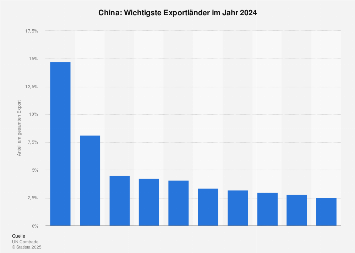
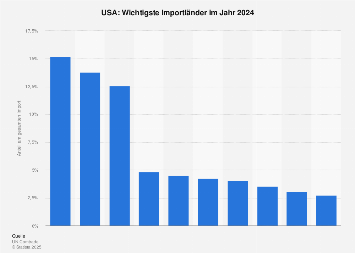
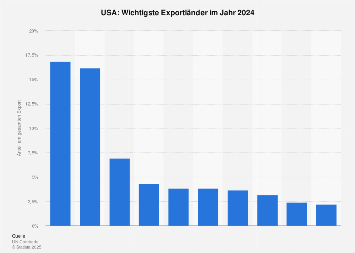
Trade wars come always at a cost on usually both sides. My motivation for this statement was that I think that China has the better lever (plus a hyperbole). Its decisions don't require any form of justification, although it currently looks as if this were also true for the USA. Chinese exports to the USA (data from 2023) are about 14%, roughly the same as US imports from China. But if we add Canada and Mexico, then US imports are 40% from these countries. Hence China damages 1/7 of its markets, the USA damages 2/5 of its supplies. And about 50% if we add Germany and Japan. If we look at US exports then we find 33% to Canada and Mexico, and only 7% to China. Adding to these figures comes that China restricted exports of rare earth metals to the USA. So, yes, the tariffs will cost China growth, but I still think the costs on the US-American side of the balance are significantly higher.

 
Erm... not so strong. Actually, they are still quite fragile, despite having a fast developing inland market. To keep their export in position (in this regard there is a grain of truth in all those trumpish ramblings) there is a certain price they have to pay.
China can pay the price better than the US. They have paid much worse and weathered it. Most of their people (whether they like it or not) are on the same page as their leadership. This is going to be more of an inconvenience to China. China will remain China in the end. The US may never return to its previous self, and the pain may last for at least a generation.
 
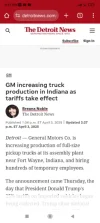
The objective is to bring back/increase manufacturing in the US. So maybe best to reserve judgment for a while.IMG_20250407_094529.webp
 
Last edited:
The objective is to bring back/increase manufacturing in the US.
Well, now I understand. Those tariffs were just to ruin jobs, so there will be workforce available to replace the cheap workforce he just scaring away. So US can start manufacturing all the cheap Chinese c... import.

Sorry, just not coherent.
 
Therefore, the prices will have to increase (or the company will make less profit).

If companies protect their margins, then the impact grows as it ripples.

For instance, if a company that makes axles sees steel cost increase by 10%, and they want to keep their current 10% margin on axles, then they need to sell the axle to John Deere for $11 more, not just $10 more. So the impact grows to the extent that companies defend margins.
 
A small segment of manufacturing may return, but it takes 3-4 years for an auto factory to be built and by then, it won't be run by humans, but mostly robots, so yay for returning 100 supervisor jobs back to the US, along with still making the cars more expensive.
 
Last edited:
The objective is to bring back/increase manufacturing in the US. So maybe best to reserve judgment for a while.View attachment 183
Interesting thesis, for early 19th Century when manufacturing meant a family owned factory that employed local workers paid in scrip at the company store. Granted that contemporary 'wage slaves' shop at Walmart and order online from Amazon, this premise fails for an obvious reason.

Manufacturing, like most sectors of our global economy particularly Supply, rely on fast and secure international pipelines uniting parts with labor from small and medium economies with assembled end-products for consumers everywhere. One goal of NAFTA, to cite just one successful trade agreement to unite North America, explicitly stated this fact.

Tea-party Tom blithely drove his GM pickup oblivious to drive train manufactured in Central America controlled by electronics from Taiwan. Why moan about who manufactures components when the end goal means improved production at lower costs to end users?

Arbitrary tariffs and nationalistic trade protectionism proved moronic and counterproductive back in the day. In a modern networked world, tariffs remain reactionary, self-defeating and ultimately a shakedown. Waiting for the miracle to come from Trumpian whims and self-serving delusions ends in failure, as amply demonstrated.
 
Last edited:
Take that, Walmart and Dollar Store and other purveyors of plastic garbage.

A decrease in the world GDP might have some unintended (by Trump) environmental benefits. I hadn't thought of that at all before reading your post, even though I suspect you mean it tongue-in-cheek, its an interesting and not-depressing thought.
 

Liberal Democracy Values

  • Free and Fair Elections
  • Rule of Law
  • Separation of Powers & Checks and Balances
  • Protection of Civil Liberties and Human Rights
  • Pluralism & Political Competition
  • Independent Media & Free Press
  • Open Civil Society

Community Values

  • Civility
  • Productivity
  • Good Faith Debate
  • Evidence Based Debate
  • Transparency
  • Integrity

Community Motto

"It is the responsibility of intellectuals to speak the truth and expose lies." - Noam Chomsky
Back
Top