
Follow along with the video below to see how to install our site as a web app on your home screen.
Note: This feature may not be available in some browsers.
You should upgrade or use an alternative browser.
Warren Buffett: Tariffs are ‘an act of war’
- Context: Economy
- Thread starter phinds
- Start date
Click For Summary
Warren Buffett stated that tariffs are akin to an act of war during a CBS interview, emphasizing their detrimental impact on trade relations. The discussion highlights the immediate market reactions, with the NASDAQ experiencing a significant drop due to tariff announcements. Participants express concerns over the economic ramifications, particularly for agriculture and manufacturing sectors, which are expected to face price increases and job losses as a result of the tariffs imposed on imports from Canada, Mexico, and China. The conversation also touches on the political pressures faced by Republican senators amidst public backlash against these trade policies.
PREREQUISITES- Understanding of economic principles related to tariffs and trade wars
- Familiarity with the U.S. agricultural and manufacturing sectors
- Knowledge of the political landscape surrounding trade policy in the U.S.
- Awareness of market indicators and their reactions to policy changes
- Research the economic impact of tariffs on U.S. agriculture, focusing on specific crops affected by recent trade policies
- Examine the effects of tariffs on the automotive industry, particularly regarding production costs and job losses
- Analyze historical data on trade wars and their long-term effects on U.S. manufacturing employment
- Explore the political dynamics influencing trade policy decisions among Republican senators
This discussion is beneficial for economists, policymakers, trade analysts, and anyone interested in understanding the implications of tariffs on the U.S. economy and political landscape.

- 297
- 215
- 297
- 215
“The US is not getting ripped off by anybody,” it said. “The problem is the US has been living beyond its means for decades. It consumes more than it produces. It has outsourced its manufacturing and borrowed money in order to have a higher standard of living than it’s entitled to based on its productivity. Rather than being ‘cheated’, the US has been taking a free ride on the globalisation train.”
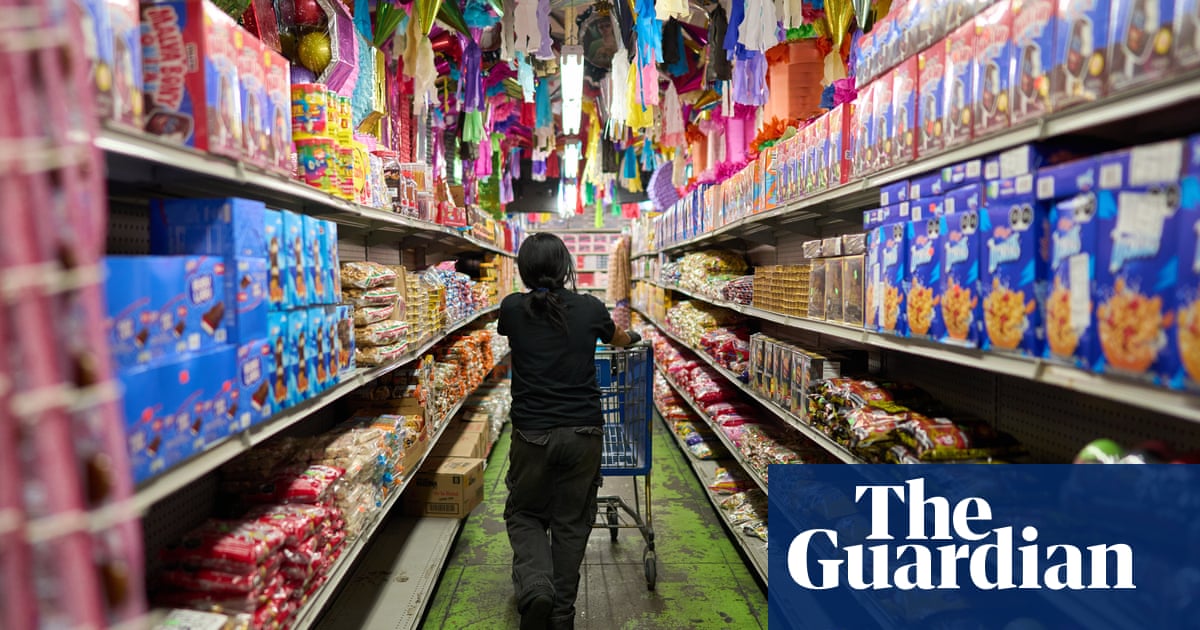
China tells US to ‘stop whining’ over tariffs as it reports GDP growth spurt
 www.theguardian.com
I can't wait until the economic realities start hitting home. I wish I could go to sleep and wake up in 2 years.

- 128
- 115

Trump’s Tariffs Prompt Wave of Lawsuits
Nearly four weeks into a costly global trade war with no end in sight, Mr. Trump is facing a barrage of lawsuits from state officials, small businesses and even once-allied political groups, all contending that the president cannot sidestep Congress and tax virtually any import at levels to his liking.
Last week, a dozen Democratic attorneys general from states including Colorado, New York and Oregon also asked a federal judge to block many of Mr. Trump’s tariffs on grounds that they had “upended the constitutional order and brought chaos to the American economy.” California sued earlier this month, claiming the president’s policies harmed its economy and budget.
The latest lawsuit arrived Thursday from the Pacific Legal Foundation, a group with reported ties to the conservative donor Charles Koch. On behalf of a clothing company, a board game designer and other small businesses, the group faulted Mr. Trump for imposing an “unlawful and unconstitutional” 145 percent tariff on Chinese goods, resulting in higher prices for American businesses.
Another legal group with ties to Mr. Koch and the conservative financier Leonard A. Leo sued early this month on behalf of a Florida company facing high costs from the president’s tariffs on China. Mr. Leo is a co-chairman of the Federalist Society, which has advised Mr. Trump on judicial appointments.
In a separate lawsuit, two members of one of the largest tribes in the United States claimed that Mr. Trump’s tariffs on Canada violated treaty rights, and they asked a judge to halt taxes on imports arriving at key points of entry.
“The president doesn’t have authority outside of authorities delegated to him by Congress to issue tariffs,” said Jeffrey Schwab, a senior counsel at the Liberty Justice Center, a nonprofit with past ties to Richard Uihlein, an Illinois industrialist and a Republican megadonor.
This month, the group sued the Trump administration on behalf of small businesses that say the recent tariffs have harmed them.

- 1,115
- 1,529
Von der Leyen rips Trump’s ‘unpredictable tariff policy’
President Trump’s tariffs will rattle countries across the world, European Commission President Ursula von der Leyen said Tuesday at the European People’s Party annual congress in Valencia.
Over the past month, she’s heavily criticized the Republican for his stark shift in trade policies while touting the European Union’s (EU) openness to strengthening alliances.
“For decades, free trade has been a driver of global prosperity. It has lifted billions out of poverty, and sustained the livelihood of millions of European families. Now, global markets are shaken by the unpredictable tariff policy of the US administration,” von der Leyen said in her Tuesday address.
“U.S. tariffs on the rest of the world are at their highest in a century. The IMF [International Monetary Fund] issued a stark warning last week. And that is no surprise, because tariffs are like taxes. They hurt consumers and businesses alike. They affect Wall Street as well as Main Street,” she added.
Trump’s reciprocal tariffs were in place for seven days before he decided to grant a 90-day pause on an uptick in levies for all partner nations except China, which now faces a 145 percent tariff on almost all imports.
A 10 percent baseline tariff still remains in place for many of the U.S. trading partners, while Canada and Mexico are subject to 25 percent tariffs.
Last week, the IMF downgraded its projection for global gross domestic product (GDP) growth to 2.8 percent growth in 2025, a notable drop from the forecast of 3.3 percent in January. The United Nation’s financial agency cited century high tariffs as the cause.
However, von der Leyen said uncertainty can work in the favor of the EU’s economy, signaling the “world of trade is turning towards us.”
“We’re working with India and Indonesia, with the Emirates and Thailand, the Philippines and Malaysia and the Pacific. They all want to deal with us. Because we are fair, we are reliable, and we play by the rules,” she told the European Commission.
“So my friends, let’s stay the course, cool-headed and united, because that’s who we are and that’s the European way of trade. Let’s stick to that.”
Comment: Von der Leyen simply spoke out about what everybody thinks.
- 297
- 215
He isn't really a political commentator, though he is very politically active in the issues of comsumer rights and right to repair. He has a very particular blunt and direct approach to all matters, and although I would never offer him as a subject-matter expert on the topic, he is very connected with small business and consumer-facing sentiment.
I think that he has done a pretty good review here of how tariffs will be treated by consumers, businesses, and (perhaps most importantly) finance.

- 108
- 79
https://www.nbcnews.com/politics/tr...nounces-new-tariffs-foreign-movies-rcna204747
He says:
"I am authorizing the Department of Commerce, and the United States Trade Representative, to immediately begin the process of instituting a 100% Tariff on any and all Movies coming into our Country that are produced in Foreign Lands".
I'm not even clear what that really means; many US-owned movies make use of facilities and services in many different countries, and many foreign-owned films make use of US facilities and services.
Even if that can be clarified, a "movie" is not an easily quantifiable object either with a fixed price; there are all sorts of complex agreements as to how they are marketed, distributed and accessed, which may not be limited by national boundaries. The amount a distributor pays to obtain the right to show a movie may include variable retrospective components, for example based on number of customers.
Of course, there are clearly identifiable "foreign movies", but even then, I find the concept of a tariff on movies "coming into the country" a quite surreal concept.
- Admin
- #188

Greg Bernhardt
- 478
- 306
So dumb. This is a move to "save Hollywood". Everything is so short sighted.Trump announces plans for 100% tariffs on all foreign movies:
- 1,115
- 1,529
So dumb. This is a move to "save Hollywood". Everything is so short sighted.
Especially considering the fact that "Hollywood" is an export cash cow. Following the stupid reasoning about trade deficits, it's probably the rest of the world that needs tariffs to protect their own industry from Hollywood, not the other way around.
Hundreds of movies are coproductions making use of several financing possibilities provided by joined countries. It is right away absurd.
I have found an interesting scientific text from 2023/2024 about protectionism by tariffs. The authors say in their abstract
We estimate the macroeconomic effects of import tariffs and trade policy uncertainty in the United States, combining theory-consistent and narrative sign restrictions on Bayesian SVARs. We find mostly adverse consequences of protectionism. Tariff shocks are more important than trade policy uncertainty shocks. Tariff shocks depress trade, investment, and output persistently, in aggregate and across sectors and space. The general equilibrium import elasticity is -0.8. Historically, NAFTA/WTO raised output by 1-3% for twenty years. Undoing the 2018/19 measures would raise output by cumulatively 4%. The findings imply higher output costs of protectionism than partial equilibrium or static trade models.
The macroeconomic consequences of import tariffs and trade policy uncertainty
The site requires to note that link, but the paper forbids distribution. I am confused. However, what I have directly shown here is publically available.
- Thread starter
- #191

- 136
- 147
Anyway, as I predicted yesterday, it was indeed a “deal” as opposed to an actual deal. There was very little substantive content. The 10 percent overall tariff on imports from Britain remained, although extra tariffs on British steel and cars were removed. Hey, children only need two dolls and five pencils, but the wealthy need their Rolls Royces, Jaguars and Bentleys. Britain, for its part, made vague promises to increase access for some U.S. agricultural products, and may be buying some Boeing jets.
Claims of a major deal were, in short, fake news. This was all about creating the illusion that Trump’s tariffs are accomplishing something.
- Thread starter
- #193
- 136
- 147
Krugman's point was less about cars than about the fact that Trumps "deals" are not really deals at all, they are more along the lines of "well, we have a concept of a deal".I think this is way more important than some luxury cars.
- 1,115
- 1,529
I have difficulty distinguishing between "deal" and "blackmail".Krugman's point was less about cars than about the fact that Trumps "deals" are not really deals at all, they are more along the lines of "well, we have a concept of a deal".
- Thread starter
- #196
- 136
- 147
Well, he IS quite the dealmaker:Trump is great negotiator as proven by the deal(s) made
- 1,115
- 1,529
Well, CNN titles it:Krugman's point was less about cars than about the fact that Trumps "deals" are not really deals at all, they are more along the lines of "well, we have a concept of a deal".
Trump floats 100% tariff on Barbies while his UK trade ‘deal’ shields super-luxury cars like Rolls-Royce

- 128
- 115
Even if that can be clarified, a "movie" is not an easily quantifiable object
So true. Trumpism lies consistently in some idealized misconception of the past. "Movies" and "films" were once important cultural entities created by "Hollywood studios" back in the 20th Century.So dumb. This is a move to "save Hollywood". Everything is so short sighted.
Modern digital methodology combines traditional films and television series with information video technology covering entertainment, education, news reporting, digital 'print' publications, etc., creating a vast selection of material available in most documented languages in connected countries. Trump may pine for "'merican exceptionalism", screening "Birth of a Nation" and "Gone With the Wind" in a 'movie theater', but modern audiences view these historical relics on a phone, personal computer, internet-connected TV, even at a library along with optional expert commentary.
The economics of producing and distributing 'movies', as stated in prior posts citing economists, bears little resemblance to the archaic 'Hollywood studio system' of the past, Actor/producers such as Jerry Seinfeld and business partner Larry David, for example, create artistic content generating wealth and jobs that causes a has-been 'reality TV' artificial character like Trump to gnash their dentures and cry for obsolete tariff protections on a bygone industry.
Modern art and entertainment industry involves myriad production companies, actors and writers guilds, vast technical enterprises encompassing diverse fields that render the concept of "a movie" hopelessly quaint. Instead embrace new or, at least, expanded art forms such as series that combine multiple sequences of 'movies', 'show episodes', 'seasons', and similar terms that provide artists and audience unparalleled access to characters and their worlds.
As a fan and sometime writer, I view modern series from HBO's "The Sopranos", Larry David's comedy productions, Marvel Studios numerous "Spiderman" and "X-Men" films, to ABC Studios "Grey's Anatomy" -- a PG-14 rated rendition of Michael Crichton's medical drama "ER" -- to constitute a virtual new art form. These art forms including traditional movies and TV shows transcend nationalism and borders, existing in and expressing a united connected World.
- Admin
- #199

Borg
- 244
- 256
And the automakers in the U.S. aren't thrilled with the so-called deal.Well, CNN titles it:
Trump floats 100% tariff on Barbies while his UK trade ‘deal’ shields super-luxury cars like Rolls-Royce

Detroit automakers fuming after Trump’s first trade deal gives preferential treatment to imported U.K. cars over their own
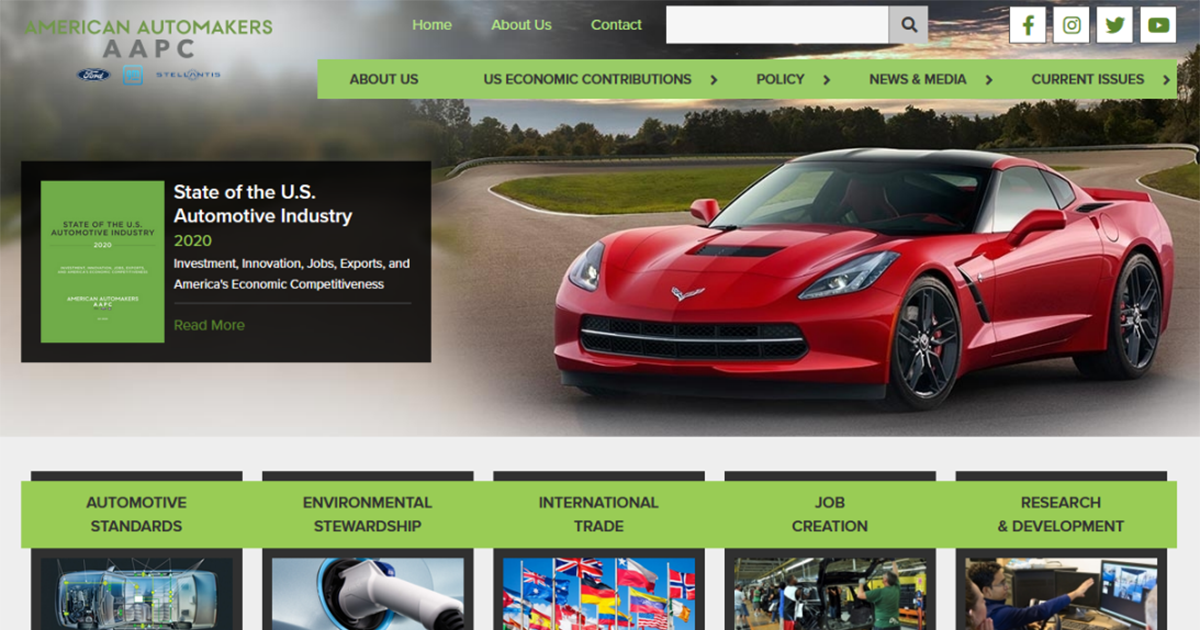
American Automakers Statement on Trump Administration’s United Kingdom Trade Announcement
“The U.S. automotive industry is highly integrated with Canada and Mexico; the same is not true for the U.S. and UK. We are disappointed that the administration prioritized the UK ahead of our North American partners. Under this deal, it will now be cheaper to import a UK vehicle with very little U.S. content than a USMCA compliant vehicle from Mexico or Canada that is half American parts. This hurts American automakers, suppliers, and auto workers. We hope this preferential access for UK vehicles over North American ones does not set a precedent for future negotiations with Asian and European competitors,” said Governor Matt Blunt, president of the American Automotive Policy Council.
- 1,115
- 1,529
- 128
- 115
It is neither, Trump plays a game of chicken.I have difficulty distinguishing between "deal" and "blackmail".
If nobody played with him and everybody ignored him, he would lose.
- Thread starter
- #202
- 136
- 147
- Thread starter
- #203
- 136
- 147
- Thread starter
- #204
- 136
- 147
- Admin
- #205
Greg Bernhardt
- 478
- 306
- 1,115
- 1,529
I think, and that is only my personal impression, that he still hasn't gotten over the fact that Obama got the Nobel Peace Prize and he did not. I see all his help-, plan-, and fruitless attempts in that direction (Ukraine and Israel) in this light.It's all a game of optics for Trump. He doesn't actually care one way or another, just how he can control the narrative to make him seem better.
- Thread starter
- #207
- 136
- 147
It's not just your opinion. I think it is fairly widely recognized that he REALLY, REALLY, REALLY wants a Nobel Peace Prize.I think, and that is only my personal impression, that he still hasn't gotten over the fact that Obama got the Nobel Peace Prize and he did not.
- 1,115
- 1,529
It's not just your opinion. I think it is fairly widely recognized that he REALLY, REALLY, REALLY wants a Nobel Peace Prize.
I don't think it would be a good idea for him to show up in Oslo. I just saw a picture today on the internet of Harald V and Obama! And it is a safe bet to say the Norwegian people feel the same.
- 1,115
- 1,529
In France, computer engineer Sacha Montel launched "Detrumpify Yourself" a free, open-source app designed to help consumers identify hidden US ownership behind everyday products.
Everyone knows Coca-Cola or Heinz are American, but many don't realize Lu, Milka, or Le Petit Marseillais are too," he told BI, naming three widely consumed brands in France.
- Thread starter
- #210
- 136
- 147
It doesn't always matter much**, but it's the thought that counts.
**For example, it is reported that In Canada a guy noticed that his local liquor store had removed all the American beer from the shelves and he just shrugged and said "Eh, I see they're out of bottled water again".
Liberal Democracy Values
- Free and Fair Elections
- Rule of Law
- Separation of Powers & Checks and Balances
- Protection of Civil Liberties and Human Rights
- Pluralism & Political Competition
- Independent Media & Free Press
- Open Civil Society
Community Values
- Civility
- Productivity
- Good Faith Debate
- Evidence Based Debate
- Transparency
- Integrity