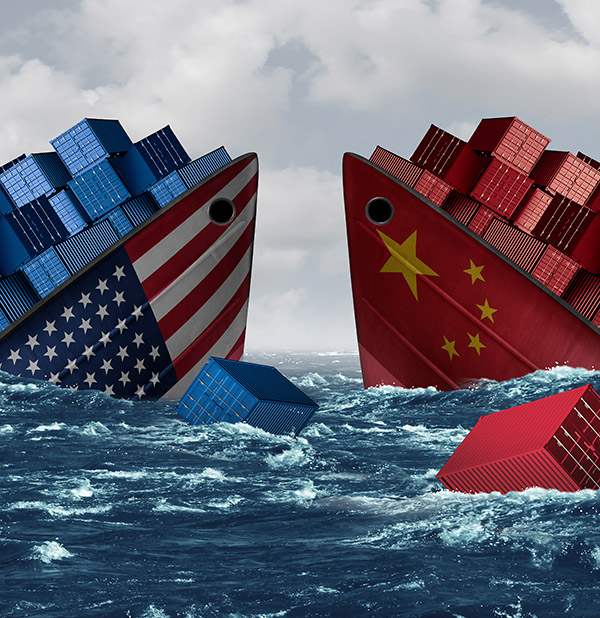
But Mr. Trump’s goals have clashed with the current economic reality in places like Spartanburg and Greenville, S.C., heavily Republican areas where foreign companies have turned the onetime textile hubs into wealthy, industrial heavyweights. Should those levies go back into effect, locals worry that they will threaten the very businesses that saved the region, home to some 1.5 million residents, all to revive a bygone industry that few people miss.
[...]
Today, companies like BMW and Michelin — from Germany and France — are the economic engines of the region. Since BMW opened its plant in Spartanburg County in the early ’90s, it has invested more than $14.8 billion into its South Carolina operations. The plant has more than 11,000 jobs, its largest single production facility in the world, according to the company. And it is the country’s largest car exporter by value, with
$10 billion in shipments last year.
So the local business community was stunned when the White House’s top trade adviser, Peter Navarro, attacked BMW’s manufacturing process in an interview this week. He
told CNBC on Monday that “this business model where BMW and Mercedes come into Spartanburg, S.C., and have us assemble German engines and Austrian transmissions — that doesn’t work for America. It’s bad for our economics. It’s bad for our national security.”
“There was widespread bewilderment in our community about that,” said Carlos Phillips, the president and chief executive of the Greenville Chamber of Commerce.
In response to Mr. Navarro’s comments, South Carolina’s governor, Henry McMaster,
told reporters this week that ever since BMW arrived in the state with well-paying jobs, other companies had followed suit and “sent the word out around the world that this is a great manufacturing state.”
“They’ve done a lot of good for South Carolina,” Mr. McMaster, a Republican, said of BMW. Still, the governor has spoken positively about Mr. Trump’s tariffs, saying that he agreed with the president’s goal to make the United States more self-sufficient.
Business leaders have attributed the region’s success partly to South Carolina’s staunchly anti-union stance, and its legacy of a work force familiar with manufacturing. Last year, the governor drew the ire of labor organizers when he criticized unions in his
State of the State address, saying, “We’ve gotten where we are without them.”
Now, leaders say that waging a trade war could undermine future recruitment of international investments and risk losing the jobs that are already in the region.
If tariffs raise prices on products and BMW’s sales drastically drop, they said, there’s a higher chance of layoffs at the Spartanburg plant. And it is difficult to imagine how cheap fabric or yarn manufacturing, the kind made in factories in Vietnam, Cambodia and China, could meaningfully fill the gaps, they added.
John Lummus, the president of Upstate SC Alliance, an economic development group, said that the region’s standard of living “has gone up so much more, that unless those companies are much more niche we’re not going to see companies come back and making T-shirts.”